

Have you ever wondered why your child sometimes eats better at school than at home?
We often wonder whether our child has eaten well at school, but the opposite can also be true: some children eat better at school than at home, and will even try foods they refuse to touch there.
It brings to mind those group hikes where children find it easier to keep walking, carried along by the others. That collective spirit gives them wings, and whets their appetite too.
But is that the only reason? We asked our dietitian Bérénice Jaime to shed some light on the subject. This is our Question of the Month.
Dietitian Bérénice Jaime's perspective
It's a common situation that can leave parents puzzled: a child who happily eats at school but refuses the very same foods at home. Several reasons can explain this difference in behaviour.
The influence of friends
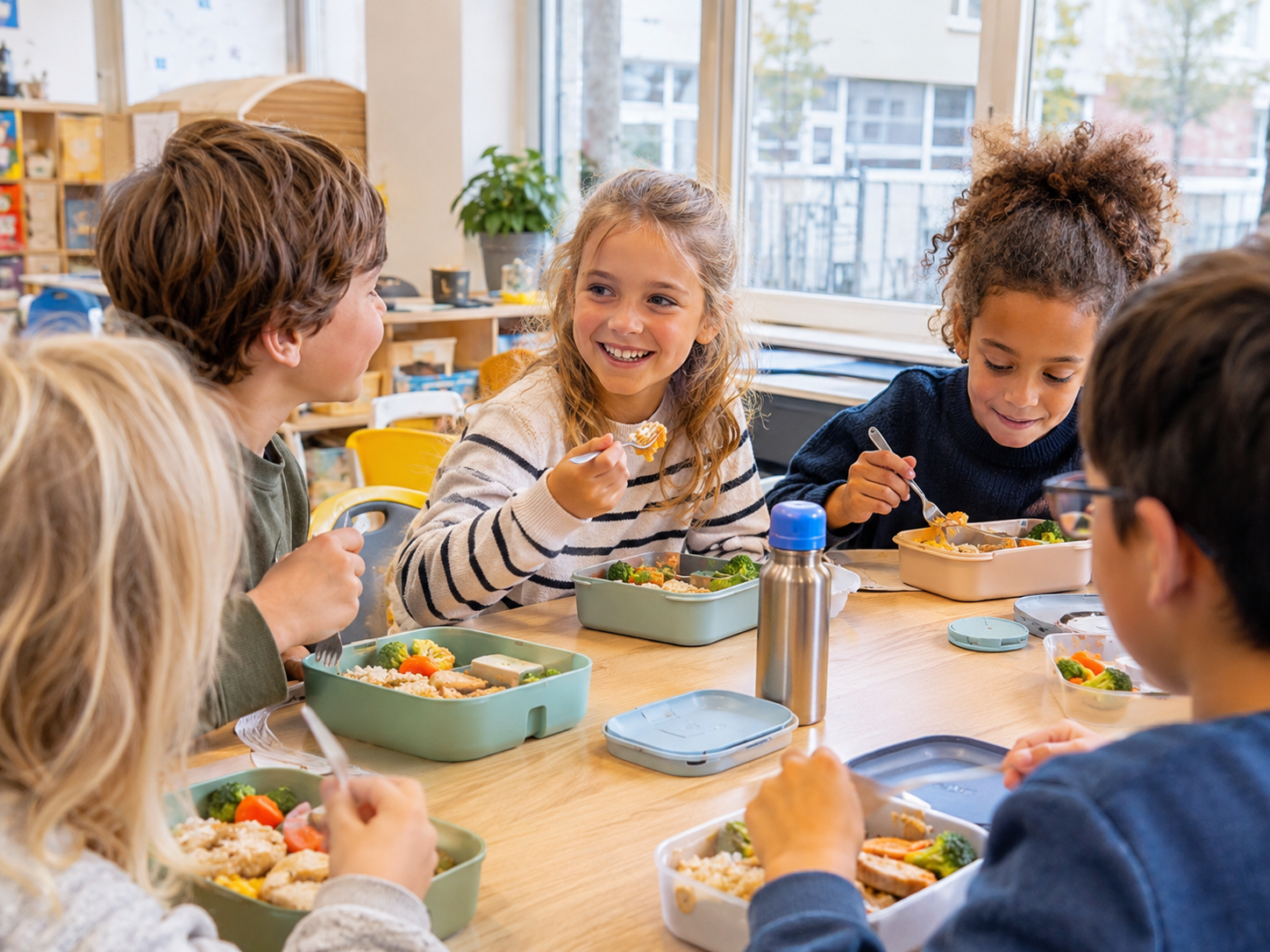
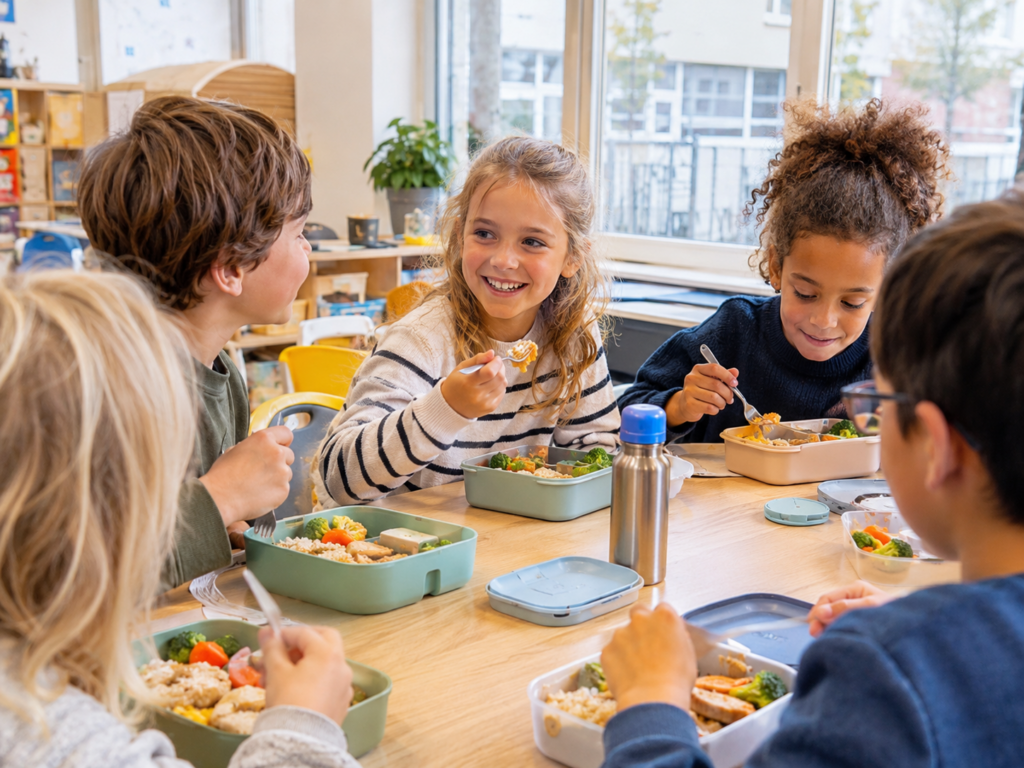
At school, children learn a lot by watching others. If their classmates eat broccoli or try a soup, for example, they're more tempted to give it a go themselves.
Between the ages of 6 and 11, the need to belong to a group becomes very important. Children are building their social identity and pay more attention to what their classmates think. They may adopt their classmates' eating habits and be influenced by what's considered "cool" or "uncool" to eat. At home, this group effect is less present.
Less emotional pressure at school
At school, the rules are the same for everyone and the meal follows a well-established routine. This shared setting generally leaves less room for negotiation over what's on the plate.
At home, meals can be charged with emotions and expectations. Mealtime can also become an opportunity for children to assert their independence, or even their opposition. When parents insist that their child eats, things can quickly become tense, reinforcing their reluctance.
End-of-day tiredness
After a day at school, especially for younger children, tiredness can reduce their patience and their willingness to try new things. They then look for familiar, comforting foods, such as pasta, bread or mashed potatoes.
The key point: a child's eating habits can change depending on the environment. The presence of friends, a familiar routine and a relaxed atmosphere can all make a difference.
Bérénice's advice

How can we create the right conditions for children to eat well at home?
Here are five simple ideas to make family mealtimes more relaxed and enjoyable.
Keep things relaxed
Avoid forcing your child to eat or negotiating every bite. A relaxed atmosphere makes mealtimes more enjoyable.
Offer small portions
Start with a small amount of food. Your child can always ask for more if they're still hungry.
Encourage independence
Let your child choose between two vegetables or help prepare the meal. Being involved encourages curiosity.
Eat together
Set a good example by enjoying the foods on offer. Children learn by watching the people around them.
Keep offering new foods
A food may need to be offered several times before it's accepted. Be patient and allow time for discovery.
And above all, create a calm, friendly atmosphere. The aim isn't for your child to finish their plate every time, but to gradually develop a positive relationship with food.
The DeliDej approach
The group effect Bérénice describes is exactly what happens at DeliDej lunchtime.
Children in the same class share their meal at the same time, and often, when one tries something, the others follow. The reassuring routine and the desire to do what their friends are doing encourage children to eat and discover new flavours.
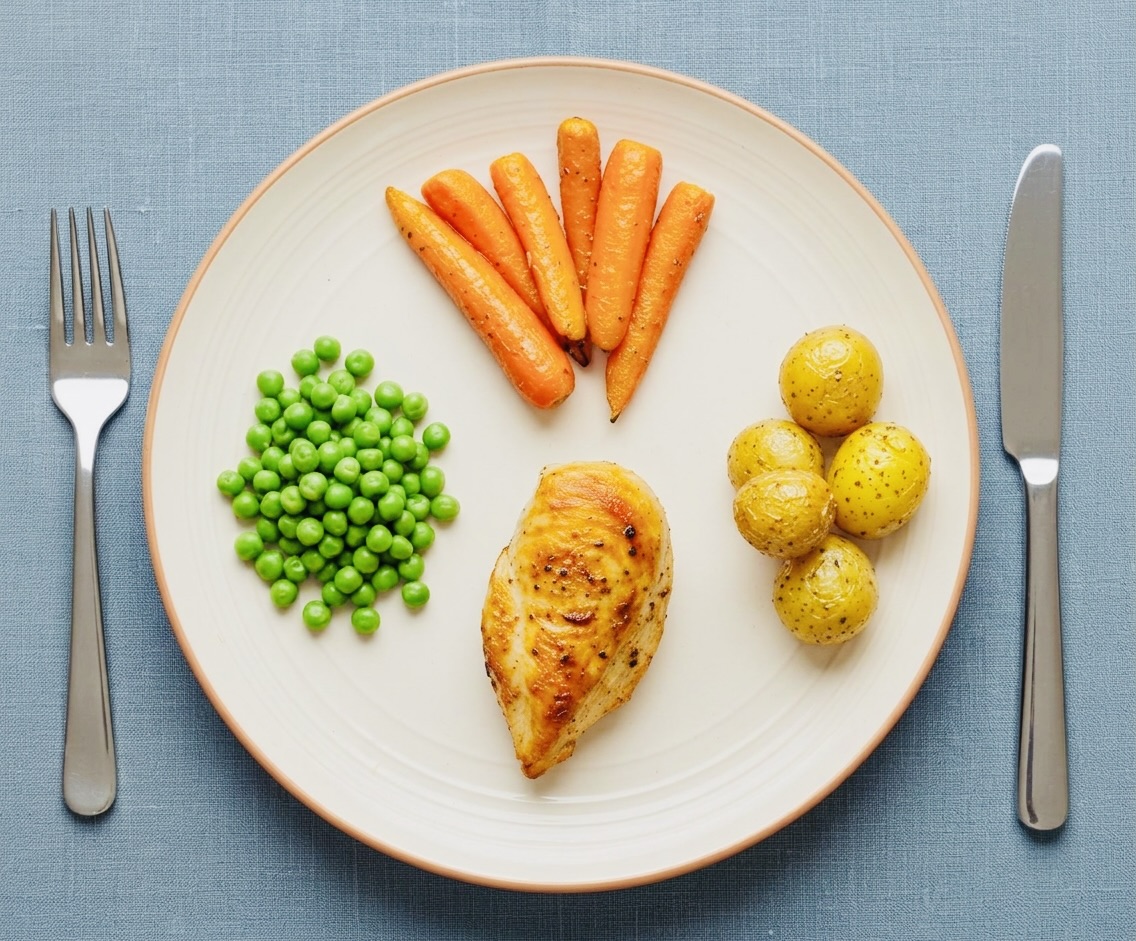
We are committed to serving hot, balanced meals because they invite children to take a proper lunch break together around the table. And it creates a small shared moment every day.
In short: eating well isn't just about what's on the plate. The pleasure of sharing a meal matters too!